

Over the past two decades, the European Union has expanded further East than ever before. Countries that once stood behind the Iron Curtain joined what they saw as a project of peace, democracy and economic opportunity. For some, EU membership became a clear success story. For others, it turned into a more complicated and fragile relationship.
The graph shows that several Eastern European countries have experienced strong growth over time, gradually moving closer to older member states in terms of GDP per capita. On paper, enlargement appears to have been a success. Yet economic progress does not tell the full story. Looking towards the Western Balkans, Ukraine and beyond, the experiences of newcomers raise an important question: what does EU integration actually deliver, and where does it fall short?

1. The new kids
Poland in the EU: from success story to source of tension
When Poland joined the European Union in 2004, it was seen as one of the biggest success stories of EU enlargement. After decades under Soviet influence, EU membership symbolized a return to Europe and a definitive break with the communist past. For many Poles, there was little doubt about that choice. As Aleksandra Kuczyńska-Zonik, political analyst explains, “there was no real alternative in the 1990s, the direction was clear: Poland wanted to join the EU as soon as possible.”

Warsaw, Poland
EU membership quickly changed daily life. Borders opened labor markets became accessible. “One of the main benefits of joining was the ability to travel freely to Western Europe;” Kuczyńska-Zonik says. Because of unemployment at home, many young Poles moved to countries like Germany, Ireland and the United Kingdom to find work. At the same time, EU funds helped modernize the country. “Another key benefit was access to EU funds for agriculture, infrastructure, and social development, which helped modernize the economy.”
Economically, it was beneficial for Western companies because
Aleksandra Kuczyńska-Zonik, political analyst
Poland is the largest country in Central Europe.
GDP rise
This economic shift is visible in numbers. Over the past decades, Poland’s GDP per capita has risen steadily. While it lagged far behind Western Europe in the 1970’s, it has now overtaken countries like Portugal and is moving closer to Spain. Western companies also benefited from this growth. “Economically, it was beneficial for Western companies because Poland is the largest country in Central Europe and represents a huge market for investment,” Kuczyńska-Zonik explains.

Strong influence
Poland’s size also gave it a different position inside the EU. Unlike many smaller new member states, it has the potential to influence policy. Tina Divjak from OGP (Open Government Partnership) agrees: “Maybe in the case of Poland, because it’s a bigger country, it can play a stronger role in EU decision-making.” While Divjak adds that this potential is limited. “If Poland would not have declined in democracy, it could be maybe recognized as a big partner.”
Some EU articles, such as Article 7 are very difficult to use for Poland.
Tina Divjak, Open Government Partnership
Troublemaker
In recent years, relations between Poland and the EU have become more tense. Concerns about the rule of law and democracy raised doubt within the EU. Poland became a key example for EU’s difficulty to intervene. “There is Article 7 of the EU Treaty, which allows the EU to sanction a member state that seriously violates democratic values, but which is very difficult to apply,” Divjak says. “We have seen this in Poland. It is very difficult to use.”
Poland has no interest in leaving the EU, it benefits too much.
Hendrik Vos, political analyst
Despite these conflicts, Poland is an active voice in Europe. It actively defends its own interests, by blocking decisions or slowing down talks. Political analyst Hendrik Vos sees this as part of EU politics. “Countries like Poland and Hungary block delay processes,” he says. “This shows that Poland is a member state with real influence.” Vos also stresses that Poland has no interest in leaving the EU: “It benefits too much.”
Conclusion
Poland’s EU story is not a simple success or failure. Economically, EU membership has been a major success, bringing growth and opportunities. Politically, however, trust between Poland and the European Union remains fragile. As the EU prepares future enlargements, Poland shows both how powerful EU membership can be and where its limits lie.
Bulgaria’s path in the EU: struggle or success?
Bulgaria joined the EU in 2007 together with neighbour Romania. Since then, only one other country joined the EU, Croatia in 2013. This makes Bulgaria one of the newest members. After joining Schengen in 2025 and adopting the euro in 2026, Bulgaria can now call themselves a fully integrated EU member state. However, almost 20 years since joining, Bulgaria still lags behind other member states in certain fields.
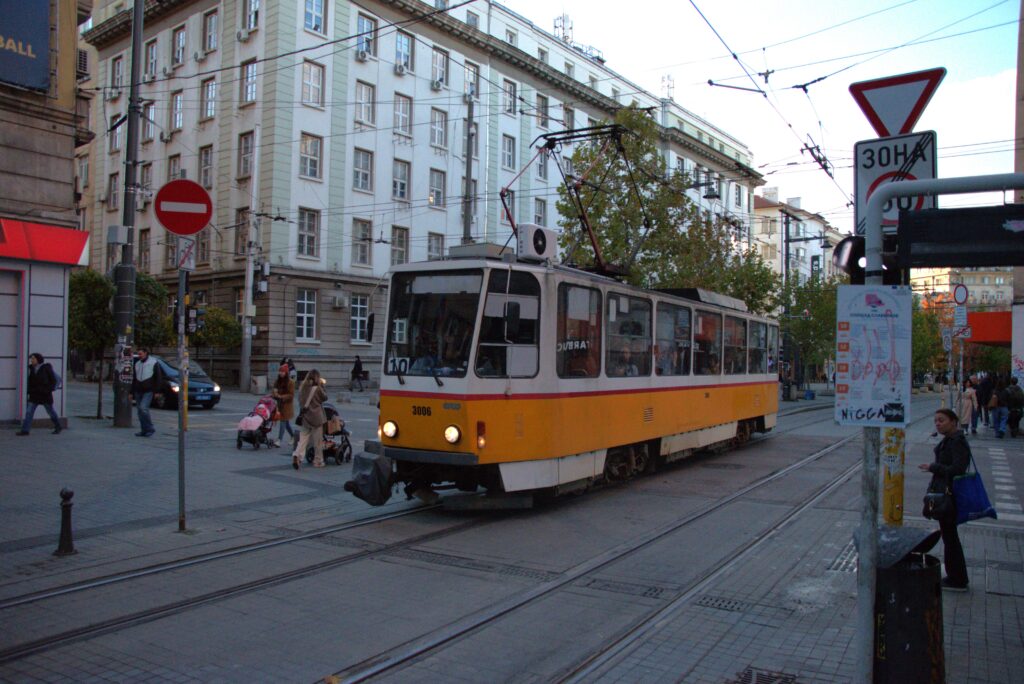
Sofia, Bulgaria
Benefits
According to Martin Lessenski from Open Society Institute Sofia (OSIS), joining the EU has been the best thing that has happened to the country: “It has been a modernizing institutional building exercise. It gave us direction.” Apart from this, joining the EU has changed Bulgaria’s politics: “It disciplined the political class to adhere to the European values and norms.”
According to Angel Petrov, political analyst for the Bulgarian newspaper Dnevnik, the main benefit for Bulgaria was convergence. Economist Tsvetelina Marinova from New Bulgarian University also stresses the economic impact of EU membership. According to her, EU funds and investments have been essential in modernising Bulgaria’s economy, especially through improvements in infrastructure, education and local development. Petrov highlights that the EU has helped Bulgaria democratizing: “The EU does not necessarily inspire lofty ideals, but it gives a compass. Bulgaria is slowly becoming Europeanized.”

Historically, we’ve been about 7–10 years behind.
Martin Lessenski, OSIS
Difficulties
But joining the EU hasn’t been an easy task. As a former communist state, Bulgaria had to come a long way to adopt the European values. Martin Lessenski from OSIS worked on a “Catch-up index”, an index that measures convergence with other EU countries in four areas: economy, quality of life, democracy, and good governance. Looking at this index, Lessenski has seen a positive evolution for Bulgaria: “Bulgaria has been catching up, but not as fast as others. Historically, we’ve been about 7–10 years behind. But still in front of candidate countries such as the West Balkans.”
Bulgaria often has good laws on paper, but not in reality.
Angel Petrov, OSIS
On top of that, Bulgaria still seems to have a legislative problem. Despite adapting to the EU legislative rules, Petrov explains that these aren’t always enforced: “Bulgaria often has good laws on paper, but their practical application does not match reality. Bulgaria frequently appears in EU infringement procedures.”
Euro and Schengen
In 2025 Bulgaria officially joined the Schengen area together with Romania and one year later they adopted the Euro, replacing the Lev. These events have helped Bulgaria becoming a fully integrated member state of the EU.
Lessenski sees adopting the euro as the last step of EU integration: “Adopting the euro will strengthen our economy and the feeling that we truly belong to Europe.” Angel Petrov agrees but warns for the public opinion in Bulgaria: “I believe it will help in the long term. However, many believe everything will become more expensive, due to misinformation.”
If Bulgaria has better economic prospects, the whole EU benefits.
Zsolt Darvas, Thinktank Bruegel
Joining Schengen was a huge step for Bulgaria in developing its economy. According to Zsolt Darvas, from thinktank Bruegel, this will benefit both Bulgaria and the EU: “Faster crossings reduce costs and bring economic benefits through more efficient operations. And if Bulgaria has better economic prospects, the rest of the European Union also benefits.”
Conclusion
Overall, Poland and Bulgaria’s path in the EU shows a standoff between progress and challenges. EU membership has provided direction, economic growth that integrated these member states within Europe. But unresolved issues continue to limit the country’s opportunities in the EU. Their trajectories show both the transformative power of EU membership and its limitations in changing domestic problems of member state
2. The waiting room
As of 2026, there are 10 countries in the waiting room of the European Union. All these countries have their own story and history. Some are getting closer to joining each day, while others seem to have lost their momentum These countries are split up in 3 categories: The Association Trio, Turkey and the WB6.
The Association Trio
Georgia, Moldova and Ukraine, form the so-called “Association Trio”. The Ministers of Foreign Affairs of these countries work together on issues related to European integration. In 2022, these countries were given candidate status. But progress slowed down due to Russia’s invasion of Ukraine. However, since 2024, negotiations with Ukraine and Moldova have continued.
Turkey
Then there is the case of Turkey. Turkey has been a candidate county since 1999; however, negotiations only started in 2005. But since President Erdogan’s rise to power in 2016 negotiations were frozen. The EU stated that Turkey lagged behind in the areas of democracy and rule of law. However, Turkey’s main opposition leader Özgür Özel announced that he would restart negotiations if he would win the next election.
WB6: Albania/Bosnia and Herzegovina/Kosovo/Montenegro/North Macedonia/Serbia

For more than two decades, the European Union has promised the Western Balkan Six a European future. Yet enlargement in the region has become a story of waiting and frustration. Tina Divjak from OGP (Open Government Partnership) sees a loss of momentum for the WB6: “These countries are in a democratic decline. When the approach started, they were on the rise, but it took so long that the momentum is gone.”
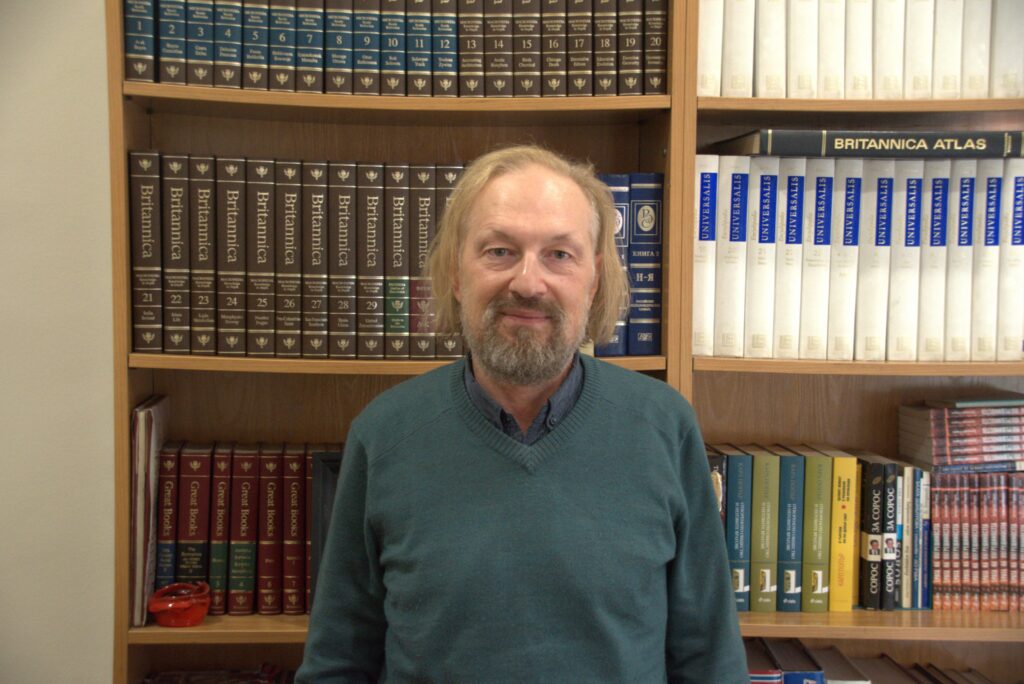
At the latest, you can talk about 2030 for Montenegro to accede.
Martin Lessenski, OSIS
Montenegro as frontrunner
Among all WB6 countries, Montenegro is still widely seen as the closest to membership. But even this success story is far from guaranteed. “Montenegro is the closest to accession. But internal political dynamics and external influences, including efforts by local politicians and foreign actors, have repeatedly derailed progress. The process remains fragile and uncertain” says Dnevnik journalist Angel Petrov.
As of 2026, Montenegro has closed 12 out of 33 chapters needed to join the EU. But it is hard to tell when Montenegro will finally join the EU says Martin Lessenski, form (OSIS): “Europe decided that it needs to move on with enlargement. At the latest, you can talk about 2030 for Montenegro to accede.”
Blockages
While things seem to be going the right way for Montenegro, other countries of the WB6 stay stuck on certain hurdles in their accession to the EU explains Angel Petrov:
- “North Macedonia is stuck because of its dispute with Bulgaria. It signed an agreement 3 years ago that it cannot deliver on for political reasons, so negotiations cannot begin.”
- “Serbia has progressed to some extent, but democratic backsliding and the unresolved Kosovo issue block further advancement.”
- “Kosovo cannot join the EU since they are not recognized by some EU countries.
- “Albania is often presented as a poster child, but it is far from being a consolidated democracy. It is dynamic and catching up quickly, but corruption and vested interests remain strong .”
- “Bosnia and Herzegovina is completely paralyzed. Bosnia is effectively two states within one. There are two entities with different foreign policies and incompatible visions of the country’s future.”
Conclusion
These problems illustrate a much bigger cycle of a lack of stability in the region. Despite efforts and the will to enlarge, EU still failed to enlarge itself with more countries. Despite the mistakes of EU, Martin Lessenski highlights that accession must be a two-way process: “On one hand, the European Union has a political will to enlarge, and on the other hand, the countries in the region have to have a political will to enlarge, because despite all the talk of previous years, many of the countries in the Western Balkans just did nothing.”
3. The Failure: Turkey
Turkey is often mentioned as a warning when talking about EU enlargement. The country has been connected to the European project for decades, but without real progress. What was once presented as a future membership perspective slowly turned into endless waiting.
Tina Divjak points to this when she talks about the risk for other candidate countries. “I’m afraid that these countries will end up like Turkey, you know, on the doorsteps.” With this, she refers to a situation in which countries remain formally connected to the EU, but without a credible path forward.

Turkey have been in some kind of contracting position for 50 years.
Tina Divjak, OGP
Turkey’s case shows how long this situation can drag on. “Turkey have been in some kind of contracting position for 50 years, it’s long,” Divjak says. Despite years of negotiations, the accession process has effectively stalled. Concerns about democracy, rule of law and political direction led the EU to freeze talks, leaving Turkey neither fully inside nor completely outside the Union.
Conclusion
Within the broader enlargement debate, Turkey has become a symbol of failure. Not necessarily because integration was impossible, but because expectations were raised and never fulfilled. For the EU, the Turkish case illustrates what happens when accession becomes an open-ended promise rather than a concrete process.
Final conclusion
EU enlargement is a dynamic process. Since forming after the second World War to reach an era of peace in Europe, the EU has constantly been expanding. Some of these expansions caused prosperity and helped countries develop. However, while the EU grew, underlying tensions between countries rose and decision making has become more difficult.
Especially after the fall of the Soviet Union in 1991, many former Soviet states chose the European path. As described in this longread, this process has had its successes and failures. In this graph you can see the growth of life expectancy of former Soviet States. Overall, we can conclude that their accession to the EU has been a success.

These examples are crucial for the EU in choosing their further moves. With possible enlargements in the Balkans and Ukraine, the EU can choose to further enlarge Europe, bringing prosperity to these countries such as in the former Soviet States. However, they should stay conscious of their fails while making these decisions to make EU a fierce competitor for the US, China and Russia.